Apple MacBook Air M5 Review: Is This AI-Powered Laptop Worth It?
Apple MacBook Air M5 Review
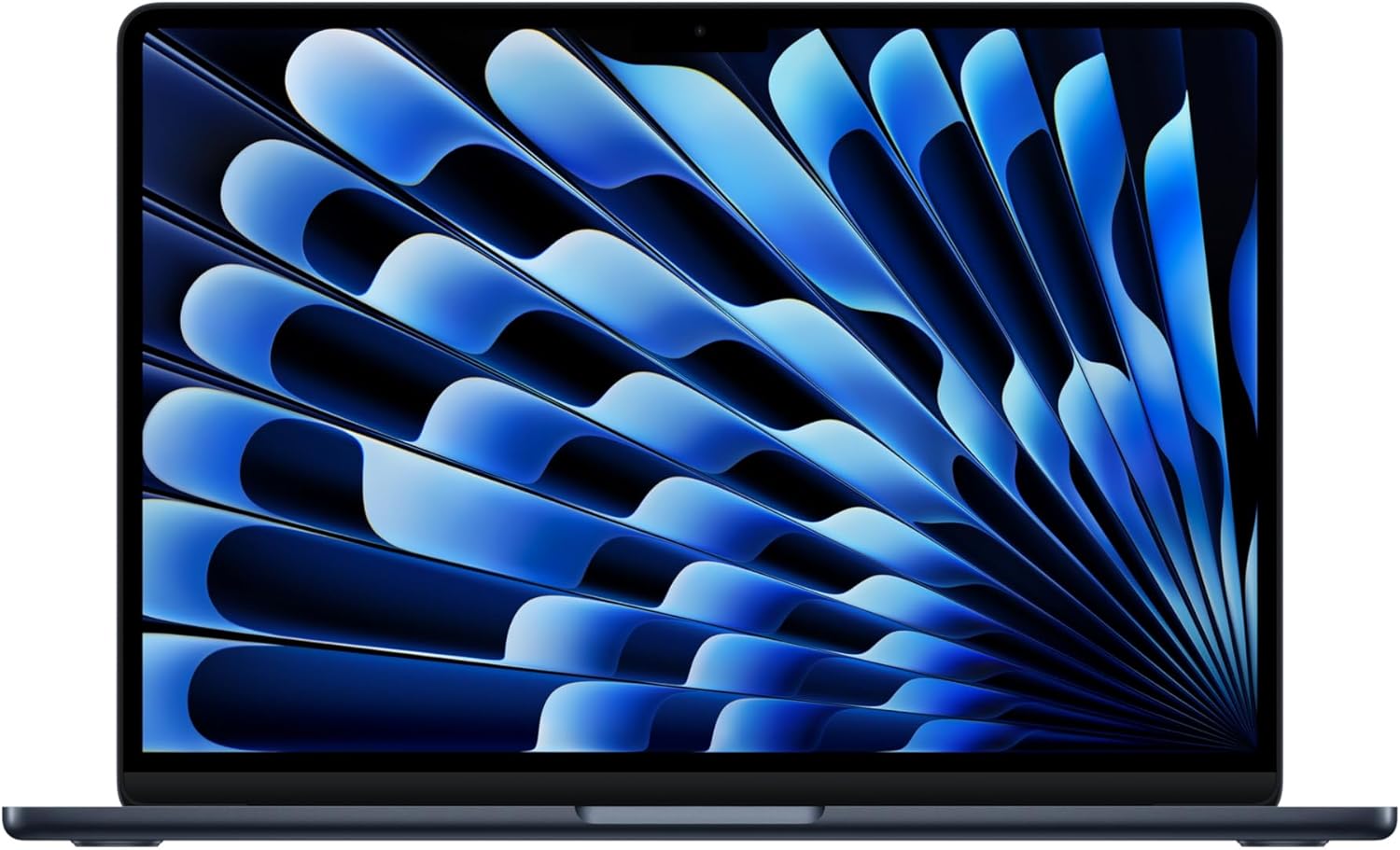
My initial encounter with this machine confirms that Apple has doubled down on the wedge-shaped legacy that defines the MacBook Air identity. Lifting it from the box, the density feels familiar—balanced, deliberate, and undeniably premium. The anodized aluminum chassis on this Midnight unit is a magnet for oils, requiring constant cleaning to maintain its dark, professional aesthetic. It feels rigid in the hand, lacking the creakiness found in cheaper Windows ultraportables, yet it remains light enough to forget inside a messenger bag for an entire afternoon.
Aesthetically, the build is an exercise in minimalism. The hinge tension is tuned perfectly, allowing for a one-finger opening that feels weighted rather than loose. However, the decision to maintain the same industrial silhouette for several generations is starting to feel stale. While the build materials remain top-tier, I find the lack of a redesigned chassis somewhat lazy. It is a sturdy piece of kit, but the visual excitement has evaporated entirely, leaving us with a device that looks exactly like its predecessors while charging a premium for the internal silicon upgrade.
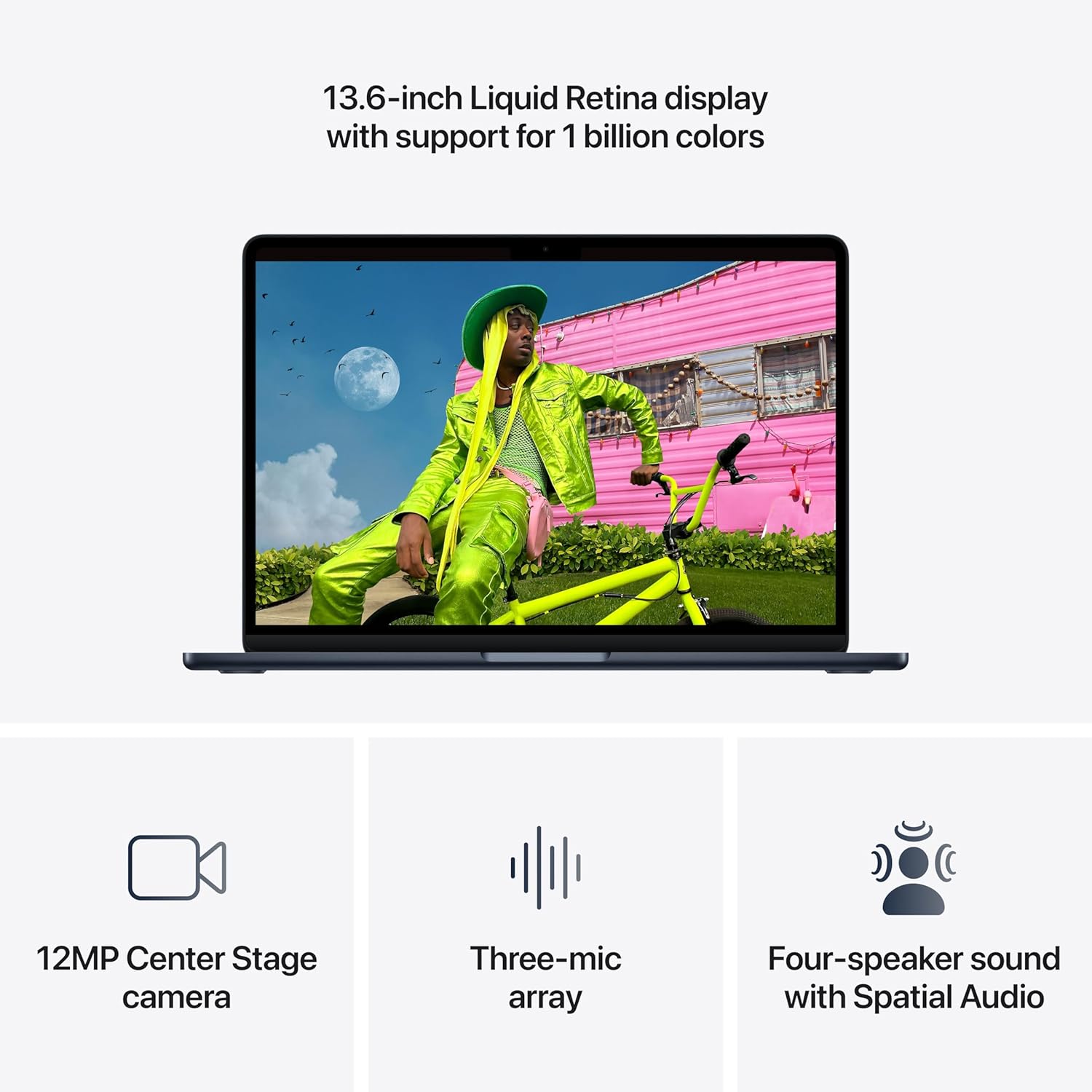
The 13.6-inch Liquid Retina display is as sharp as I expect from the brand. Text rendering is crisp, and the color gamut coverage is more than enough for professional color grading or casual media consumption. My concern lies with the peak brightness; while it is adequate for indoor office environments, it struggles to combat harsh glare when working near a bright window or outdoors. The lack of a higher refresh rate, especially at this price point, feels like an intentional omission to protect the Pro lineup, which is a frustrating limitation in the current market.
Audio performance is surprisingly robust for such a thin chassis. The speakers push clear, distortion-free mids and highs, even at higher volume levels, though the bass response is inevitably thin. It handles video conference calls with absolute clarity, and the spatial audio integration creates a wider soundstage than the dimensions suggest. Yet, I am tired of the notch; it remains an intrusive visual break that serves little purpose other than housing a camera module that, while capable, does not justify the screen real estate it consumes.

In real-world testing, the M5 chip handles daily multitasking with absolute indifference. I pushed it through heavy web browsing with dozens of tabs, photo editing in professional suites, and background video encoding simultaneously. It never stumbled. The memory management is efficient enough that I rarely felt the lack of extra RAM for standard workflows. However, the moment I moved into high-intensity tasks, the system’s lack of active cooling became apparent. The machine stays snappy, but it does not have the sustained output of a fan-cooled device.
Software responsiveness is where this laptop shines. Apps launch instantly, and the integration with macOS feels tighter than ever. While the AI features are marketed as a significant leap, I found them to be more of a sophisticated utility than a transformative change. The Neural Engine handles local processing tasks without hitching, but the user experience remains largely the same as previous iterations. I experienced no meaningful lag, but I also did not feel like the M5 chip was being fully utilized by the software available today.
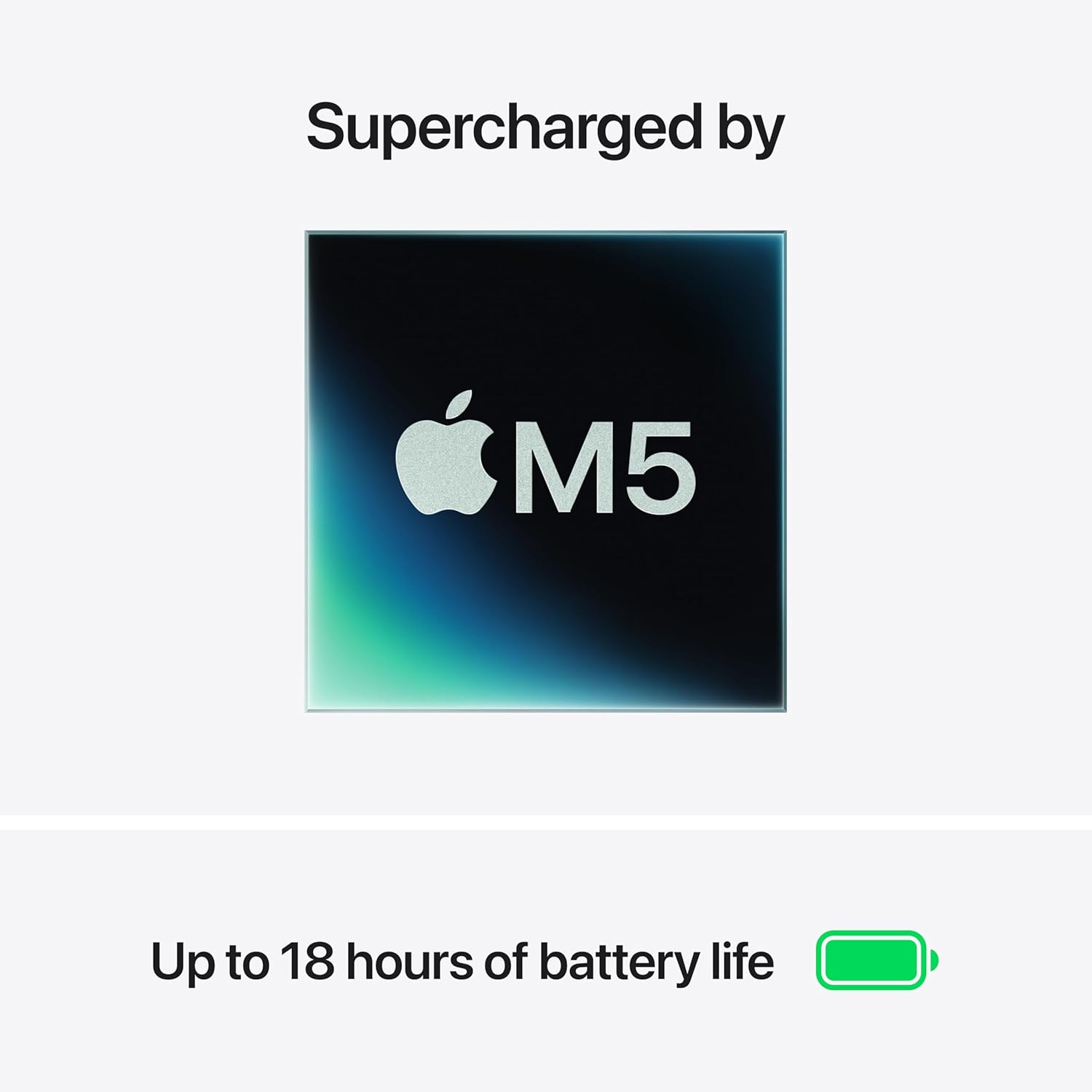
Battery longevity is the strongest argument for this hardware. I managed to get through an entire workday of mixed office tasks without reaching for the MagSafe cable. It is a reliable performer, and the power management in macOS ensures that sleep states do not drain the battery like on most x86 machines. Charging is fast enough to get me back to a full state during a lunch break, which is a major convenience for mobile professionals who move from site to site.
Thermals are the unavoidable compromise of this design. Because there is no fan, the underside of the chassis becomes noticeably warm during sustained heavy loads. I monitored the surface temperatures while running intensive processes, and while it never became uncomfortable to hold, the heat dissipation is clearly struggling to keep up with the peak performance of the M5. It is a quiet machine, but silence comes at the cost of throttled performance during extended heavy workloads.
The biggest flaw is the connectivity limitation. Apple continues to restrict users to two Thunderbolt 4 ports, which is simply insufficient for a professional-tier price. Having to rely on dongles just to connect a mouse, an external drive, and a monitor simultaneously is a friction point I should not have to deal with in 2026. This is clearly a budget-cutting measure disguised as a design choice, forcing users into a proprietary ecosystem of expensive adapters that clutter the desk and negate the beauty of the portable design.
Furthermore, the base storage configuration is stingy. Charging high prices for upgrades to the SSD capacity is a strategy that feels predatory in the current era of affordable storage. You are effectively paying a premium for the base unit, only to be forced into spending even more to make it viable for long-term ownership. They are cutting corners on I/O and storage tiers to boost margins, and it is a blatant disregard for the needs of the power user.
This laptop is for the student, the writer, and the administrative professional who values silence and battery life above all else. It is a luxury item for those who live in the Apple ecosystem and want a light, capable machine that just works. If you are a video editor, a 3D renderer, or a software engineer dealing with heavy containerized environments, you should absolutely avoid this. You will hit the thermal ceiling immediately, and the lack of ports will turn your desk into a mess of cables.
Long-term value is a mixed bag. The silicon is future-proofed enough to handle macOS updates for years to come, and the build quality ensures the chassis won’t fall apart. However, the lack of user-upgradeable components means that once the RAM or storage becomes the bottleneck, the machine is dead weight. You are buying a three-to-four-year lifespan at most before the internal limitations force an upgrade. It is a high price to pay for a disposable experience.
The Competitive Landscape
When stacked against the current market, this machine is an outlier that refuses to play by the rules of its competitors. Where other manufacturers are pushing for higher ports counts and user-serviceable parts, this device bets everything on its proprietary silicon efficiency and brand loyalty. It is a polished, locked-down experience that demands you conform to the manufacturer’s vision of computing.
| Feature | Apple MacBook Air (M5) | Dell XPS 13 (Snapdragon X Elite) |
|---|---|---|
| Processor | Apple M5 Chip | Qualcomm Snapdragon X Elite |
| Display | 13.6-inch Liquid Retina | 13.4-inch OLED Touch |
| Connectivity | Wi-Fi 7 / Bluetooth 6 | Wi-Fi 7 / Bluetooth 5.4 |
| Estimated Price | Check Latest Price | Check Latest Price |
The Final Verdict
Deciding on this device requires an honest assessment of your workflow. It is a beautiful, highly capable laptop that excels at everything except high-intensity, sustained production. It is a masterclass in efficiency and design, yet it is held back by a stubborn refusal to modernize the I/O and cooling infrastructure. If you can live with two ports and a warm chassis, it is a joy to use. If not, look elsewhere.
|
|