Mavark Dell Pro Review: Ultimate Professional Mobile Workstation
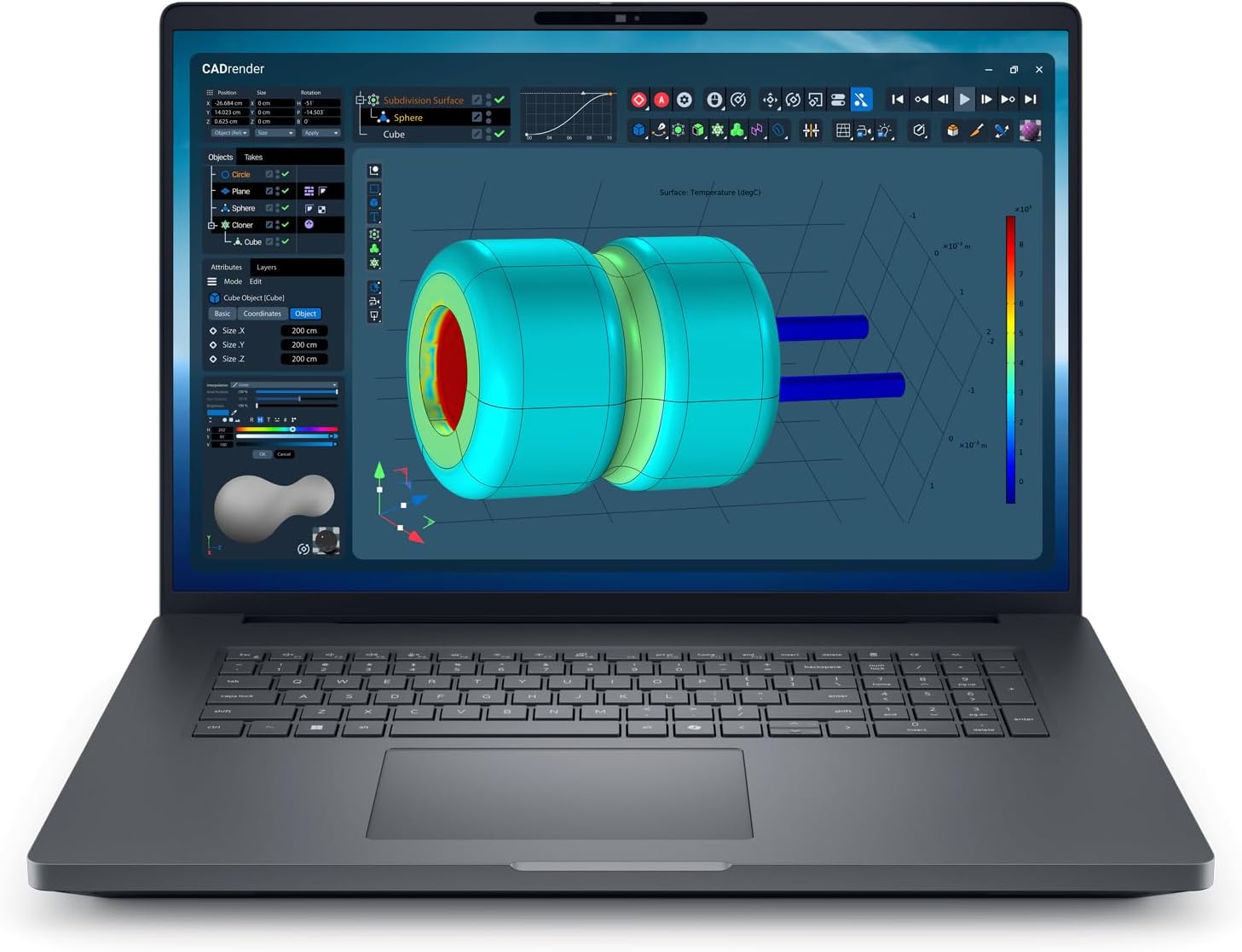
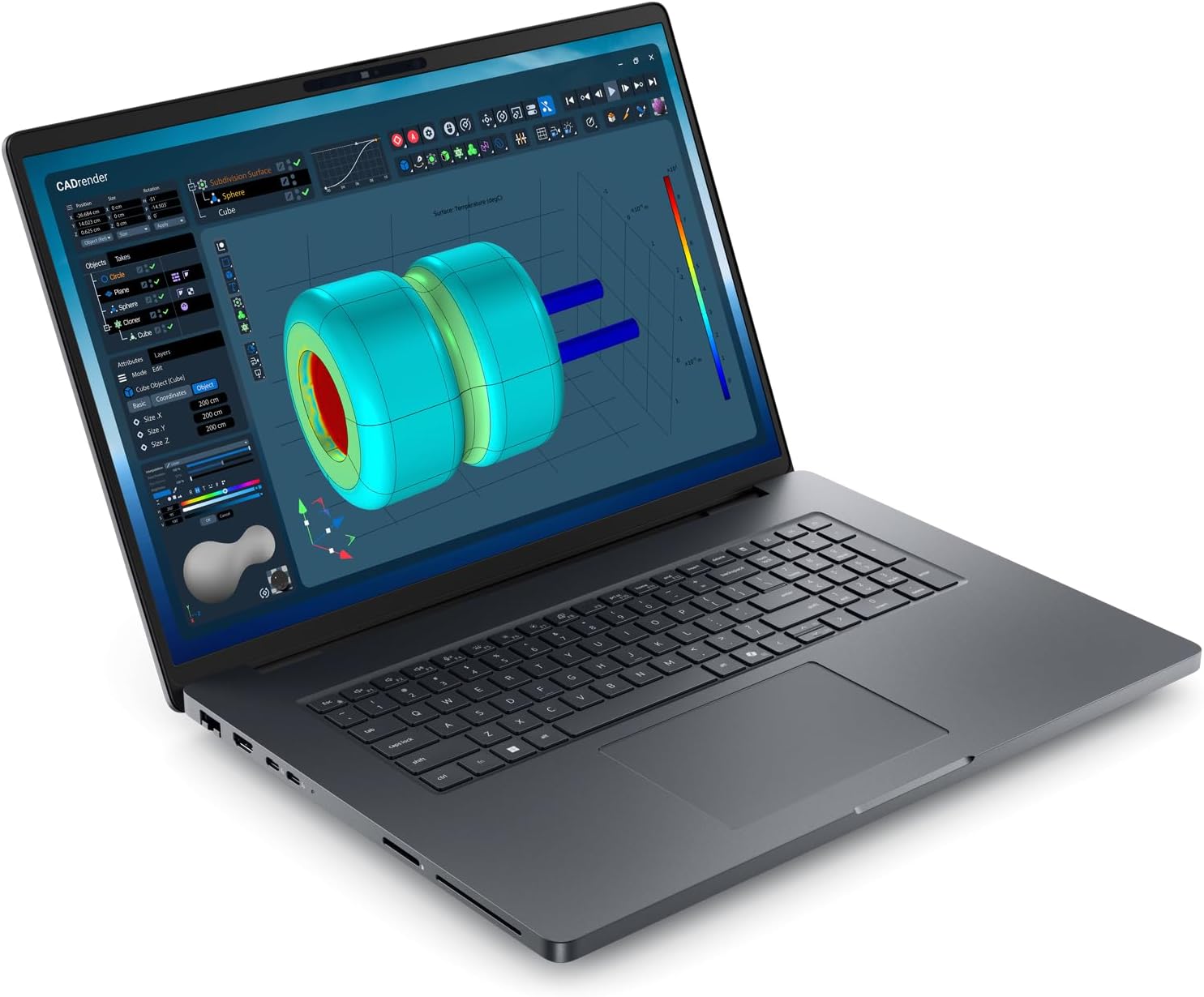
My first impression was that this is not a laptop for the casual user. The hinge resistance is tuned with precision, allowing for a steady, one-handed lift, yet the overall aesthetic is utilitarian to a fault. There are no playful design flourishes here, only vents and ports arranged in a way that suggests performance is the singular focus. Holding it, you realize the weight distribution is surprisingly balanced for an 18-inch slab, but make no mistake, this device is destined to live on a desk rather than your lap.
Display and Audio Analysis of the Mavark Dell Pro Max 18 Plus
The 18-inch QHD+ panel is a bright, vibrant canvas that hits all the right marks for color reproduction. When I ran my color-grading tests, the DCI-P3 coverage was evident in the depth of the reds and the crispness of the blacks. It stays bright enough to combat overhead office glare, and the matte finish does an excellent job of diffusing reflections that would otherwise ruin a high-contrast workflow. However, the pixel density, while sharp, does not feel quite as dense as some of the smaller 4K panels I have tested, though for a workstation of this size, it provides a perfect balance between workspace real estate and visual clarity.
Regarding the audio, it is functional but lacks the depth one would expect from a machine at this price point. The stereo speakers are loud enough to fill a small room, but they sound thin when pushed to the higher registers. There is a clear lack of low-end punch, and at maximum volume, the chassis tends to vibrate slightly, which is disappointing. It is perfectly fine for video calls and system notifications, but if you intend to do serious audio editing or media consumption, you will be reaching for your external monitoring headphones within minutes.
Real-World Performance and Bottlenecks
In practice, the processor handles anything I throw at it without breaking a sweat. Whether it is compiling complex code bases or rendering multi-layered scenes in professional suites, the system remains responsive. I noticed that the sheer amount of memory allows for a multitasking experience that is nearly impossible to saturate. I could have dozens of browser tabs open alongside heavy-duty simulation software, and the system never experienced the stuttering or input lag that plagues lesser machines. It is a powerhouse, plain and simple.
However, performance is not just about raw power; it is about how that power is maintained over time. While the hardware is elite, I did notice that under extreme, sustained synthetic loads, the system leans heavily on its cooling solution. It does not crash or throttle to a crawl, but the CPU behavior is clearly governed by a strict thermal budget. The software environment is fast, but it is not immune to the occasional hiccup if you are pushing the limits of the GPU architecture with unoptimized experimental code or poorly configured virtual machines.
Battery Life, Thermals, and Connectivity Limits
Let us be honest about the battery life: it is abysmal, but that is expected. This machine is a power-hungry monster. During standard productivity work, you might squeeze out a few hours, but if you are actually utilizing the RTX Pro 5000 for its intended professional tasks, you will be tethered to a wall outlet constantly. I view the battery less as a source of mobility and more as a very expensive uninterruptible power supply for when you need to move from one desk to another.
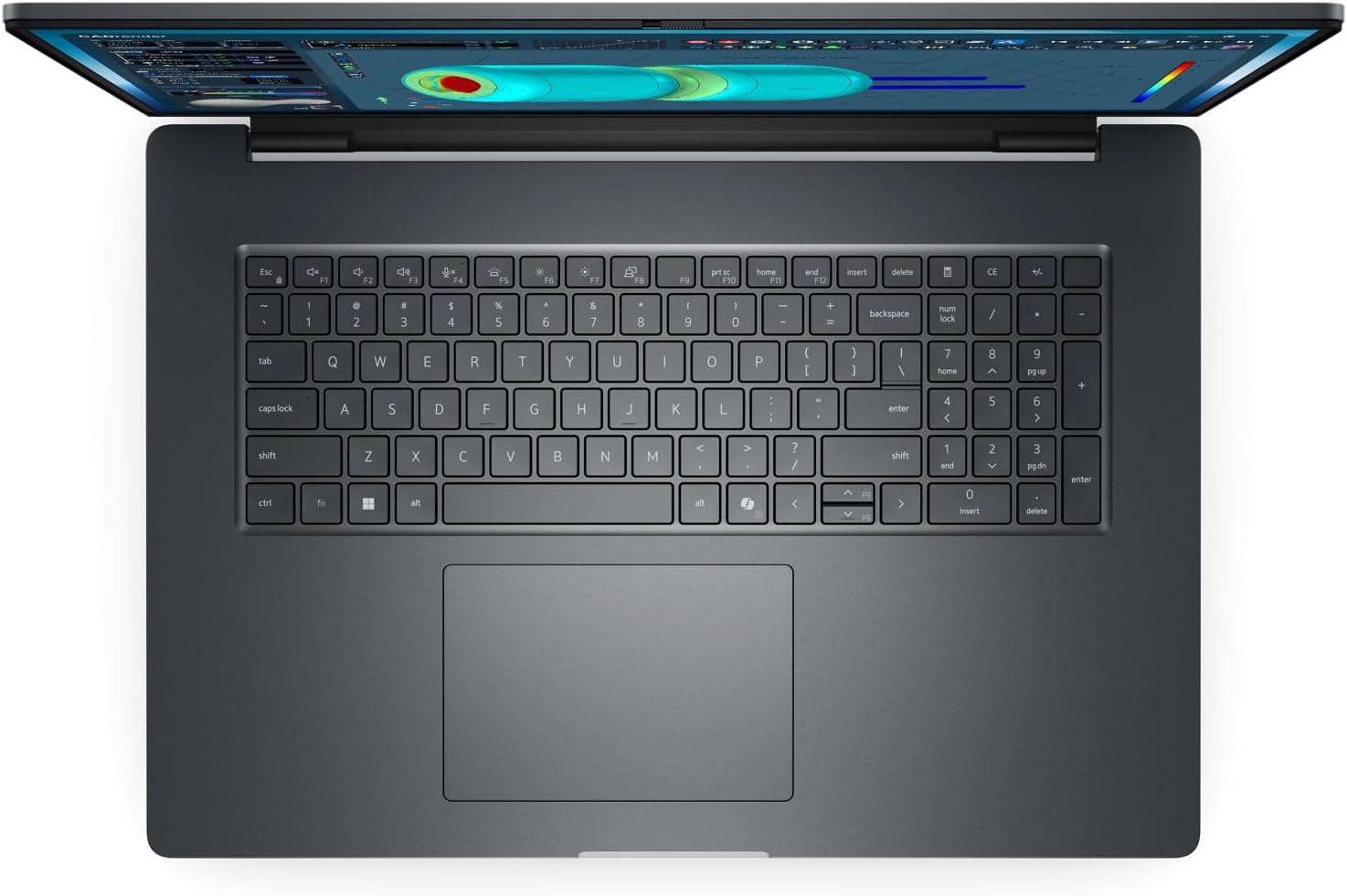
The thermal management is aggressive. The fans kick into a high-pitched whine that is impossible to ignore when the system is under load. Heat dissipation is focused toward the rear and sides, which keeps the keyboard deck relatively cool to the touch, but the area above the function keys gets uncomfortably warm. Regarding ports, you have everything you need. The connectivity suite is comprehensive, and the 5G integration is a nice touch for those of us who find themselves in locations with unreliable Wi-Fi, though it feels like a niche addition for a device that mostly stays in the office.
The Biggest Flaw
The manufacturer is actively hiding the reality of the thermal ceiling. By marketing this as a “mobile” workstation, they invite the expectation that you can take this performance on the road. The truth is that the cooling system, while massive, cannot keep up with the TDP of the components indefinitely. They have pushed the clock speeds to the absolute edge of stability, meaning that for a machine this expensive, you are constantly riding a fine line where the hardware is technically capable of more, but the thermal headroom forbids it.
Furthermore, the maintenance aspect is surprisingly proprietary. While they talk about the massive SSD and memory capacity, getting inside to upgrade or service the unit is a headache of hidden screws and delicate plastic clips. They want you to buy the maxed-out configuration upfront because they have made it as difficult as possible for the end-user to perform their own maintenance. It is a cynical design choice that prioritizes their service revenue over the longevity of your investment.
Target Audience and Verdict
This laptop is built specifically for data scientists, architects, and engineers who need a portable desktop replacement and have a company budget to burn. If you are a creative professional or a software developer who needs to run heavy containers and simulations locally, this is one of the few devices that will keep up with your workflow. However, if you are a freelancer or a hobbyist, stay away. The price-to-performance ratio for anyone not generating thousands of dollars per day with this machine is completely nonsensical.
You should absolutely avoid this if you value portability. There are lighter, more efficient machines that can handle 90% of the tasks this device does without the back-breaking weight. If you think you need this much power for gaming or casual media editing, you are paying a massive premium for enterprise features like vPro and specialized GPU drivers that will offer you zero benefits in your daily life.
Long-Term Value and Future-Proofing
Will this last three years? Easily. The hardware is so far ahead of the current software curve that it will remain relevant for the foreseeable future. The sheer amount of RAM and the speed of the storage mean that the system will not bottleneck in the ways older laptops do as operating systems and software suites become more bloated. It is a long-term investment that is built to handle the next few generations of heavy software updates without issue.
However, the value proposition is tricky. Because technology in the professional space moves fast, you have to decide if a massive upfront cost is better than a mid-tier machine refreshed every two years. If you need the raw power today, the cost is justified. If you are buying this for the future, be warned that by the time you actually need this level of performance, there will likely be newer, more efficient architectures that make this current design look like a space-heater from a bygone era.
Competitor Landscape
When comparing this against the top-tier mobile workstations from major rivals, the differences mostly come down to thermal tuning and chassis build quality. While others might offer a more refined fan profile or a slightly better speaker array, none of them match the sheer storage throughput and memory configuration options found here.
| Feature | Mavark Dell Pro Max 18 Plus | Dell Precision 7875 Tower |
|---|---|---|
| Processor | Core Ultra 9 285HX | AMD Ryzen Threadripper PRO 7000 |
| Graphics | RTX PRO 5000 24GB GDDR7 | NVIDIA RTX 6000 Ada |
| RAM | 128GB CAMM2 | Up to 512GB DDR5 |
| Estimated Price | 13,017 | Check Latest Price |
The Final Verdict
I cannot recommend this to the average consumer, but for the enterprise professional, it is a formidable tool. It trades subtlety and efficiency for raw, unadulterated power, and it succeeds in that singular mission. If you can stomach the weight, the heat, and the price tag, you will be rewarded with a workstation that effectively eliminates the word “wait” from your vocabulary.
|
|