Samsung Galaxy Z Fold7 Review: Is This the Ultimate Foldable?
Samsung Galaxy Z Fold7 Review
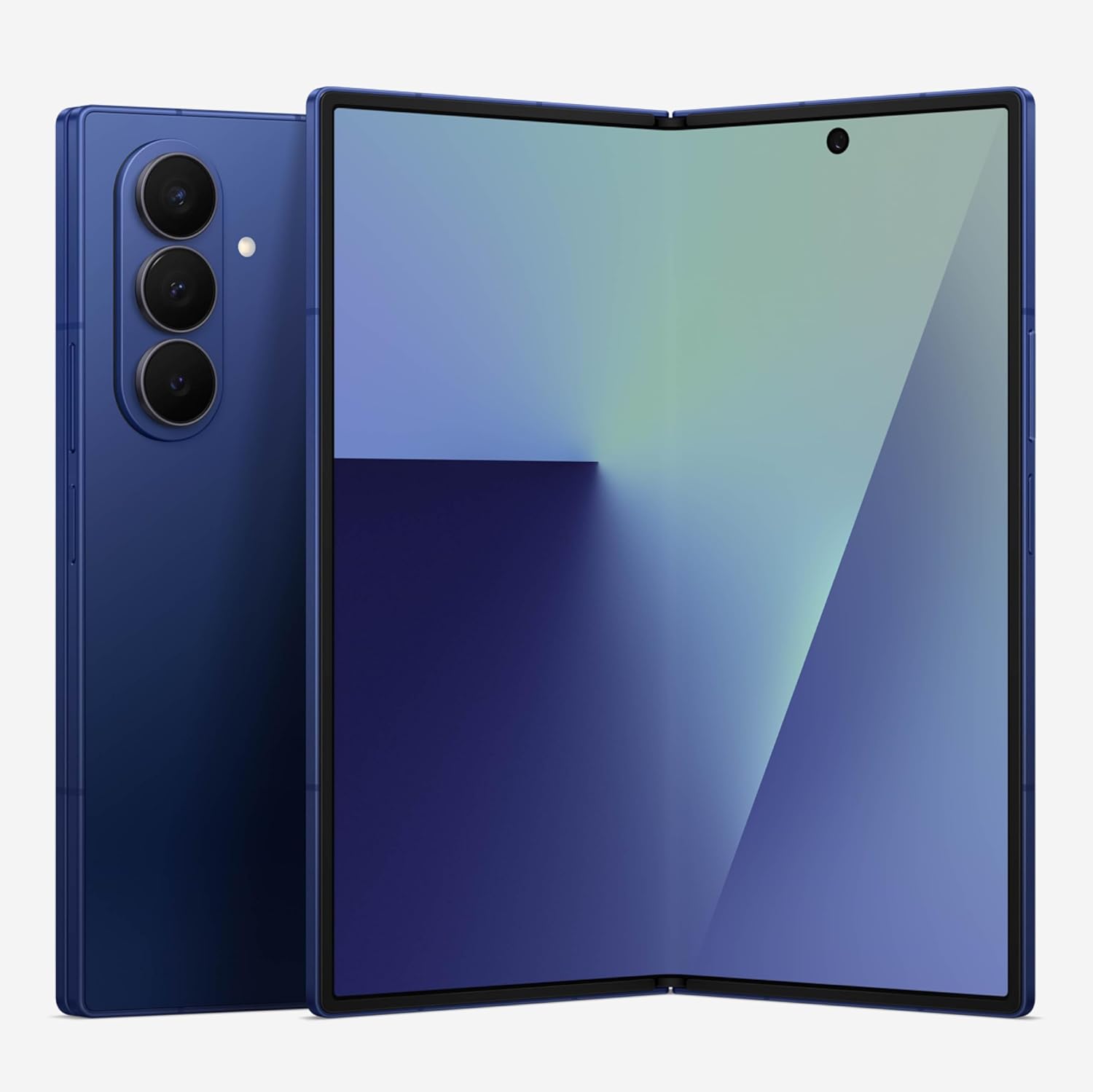
I have spent enough time with the Samsung Galaxy Z Fold7 Review unit to know exactly where the marketing department ends and the reality of the hardware begins. The unboxing experience is minimalist to the point of being insulting given the price tag, leaving you with just the device and a cable. In the hand, the chassis feels dense. Samsung has leaned into the “Blue Shadow” finish, which looks sharp under studio lights but acts as a magnet for skin oils and micro-abrasions within hours of unboxing. The hinge mechanism feels tighter than the previous iteration, suggesting a more refined internal track system, but the weight distribution remains top-heavy when held in a folded, one-handed grip.
Aesthetically, this device tries to mimic a standard smartphone when closed, and for the most part, it succeeds. The move to a wider cover display is not just a spec-sheet update; it fundamentally alters the ergonomics. I found that I could actually type a coherent sentence on the outer screen without constantly triggering adjacent keys. However, the sheer thickness of the folded state remains a persistent annoyance. It does not disappear into a pair of jeans, and the physical presence of the hinge creates a noticeable bulge that makes the device feel like a brick in formal trousers.

The primary 8-inch folding display is, as expected, a powerhouse of color reproduction and contrast. Samsung continues to lead the pack in panel brightness, and I found the screen perfectly legible under direct, harsh sunlight. There is no shift in color temperature when viewing from off-angles, and the uniformity across the panel is impressive for a flexible OLED. The crease remains, of course. While it is less aggressive than earlier generations, it is still tactilely present. If you are the type of person who runs their finger across the center of the screen frequently, you will never truly forget that this is a foldable display.
Audio performance is equally polarizing. The stereo speakers are loud enough to fill a small room, but at maximum volume, the higher registers tend to clip and sound tinny. The separation is decent for a mobile device, but there is a lack of low-end punch that makes media consumption feel hollow compared to dedicated tablets. It is sufficient for casual video calls or quick YouTube clips, but if you value audio fidelity, you will be reaching for your earbuds within the first five minutes.
When I push the hardware through real-world multitasking—running three apps simultaneously across the wide inner canvas—the Snapdragon 8 Elite processor handles the load without breaking a sweat. Application switching is instantaneous, and I rarely encountered the stutter that plagues cheaper Android devices. That said, the software interface still feels like a compromise. You are essentially using a giant phone OS that has been stretched rather than a specialized tablet interface. Some apps simply do not know how to handle the aspect ratio, leading to stretched UI elements or awkward letterboxing that feels unprofessional for a device of this tier.
My daily workflow involves heavy email management and document editing, and the internal screen is genuinely useful for these tasks. However, the software bottleneck is real. I found that moving data between windows often requires more taps than it should, and the “AI” features, while marketed as advanced, frequently feel like glorified search shortcuts. They are convenient for quick photo crops or summary drafts, but they do not fundamentally change how I interact with the OS. It is a powerful tool, but it is a tool that requires you to adapt to its quirks rather than one that adapts to your needs.
Thermal management is the Achilles’ heel of this slim form factor. Under sustained loads—like exporting a 4K video or intensive gaming—the upper quadrant of the device becomes uncomfortably warm. The internal cooling solution is clearly struggling to move heat away from the processor, and the software aggressively throttles performance to compensate. You will notice a drop in responsiveness once the device crosses a certain thermal threshold. The port selection is standard for the class, meaning you are limited to a single USB-C interface, which makes external connectivity a dongle-heavy nightmare.
Battery longevity is another point of contention. While Samsung claims the cell is optimized for long days, my experience suggests otherwise. With the inner screen brightness set to high and cellular data active, the battery drains at a pace that demands a top-up by mid-afternoon. If you are a power user, this is a “plug in at 3 PM” device. If you are a light user, you might make it through the day, but it is not the marathon runner the marketing material suggests.
The biggest flaw in this device is the lingering fragility of the inner screen panel. Despite the “Time-Tested Toughness” claims, I am constantly aware that the screen is a delicate, multi-layered component that is one bad drop or one particle of grit in the hinge away from an expensive repair. Samsung is hiding the fact that for all the advancement in materials, the inner display remains a high-maintenance liability. If you are prone to dropping your phone, this is not the device for you. The risk profile is simply too high for the average user.
This is a device for the tech enthusiast who wants a proof-of-concept for the future of mobile computing. If you are a power-user who needs a tablet and a phone in one pocket and you have the budget to replace the device if it fails, the utility is undeniable. However, anyone who prioritizes reliability, drop-resistance, or pure photographic perfection over the “wow” factor should stay far away. This is an expensive experiment in form factor that has yet to fully overcome the physical limitations of the technology.

Regarding long-term value, I have serious doubts about the three-year viability of this unit. The hinge wear and the inevitable micro-cracks that develop on the inner screen protector are not just theoretical; they are a standard part of the foldable lifecycle. Paying this much for a device that will likely show significant cosmetic and structural fatigue within thirty-six months is a tough pill to swallow. You are paying for the novelty, not the longevity.
The Competition and Market Reality
When you look at the current market, it is clear that this device occupies a very specific niche. It is positioned against ultra-premium slabs and a dwindling list of other foldables that offer similar screen estate but lack the refined software ecosystem found here. The following comparison highlights where this device sits in the hierarchy of mobile hardware.
| Feature | Samsung Galaxy Z Fold7 | Google Pixel 9 Pro Fold |
|---|---|---|
| Processor | Snapdragon 8 Elite | Google Tensor G4 |
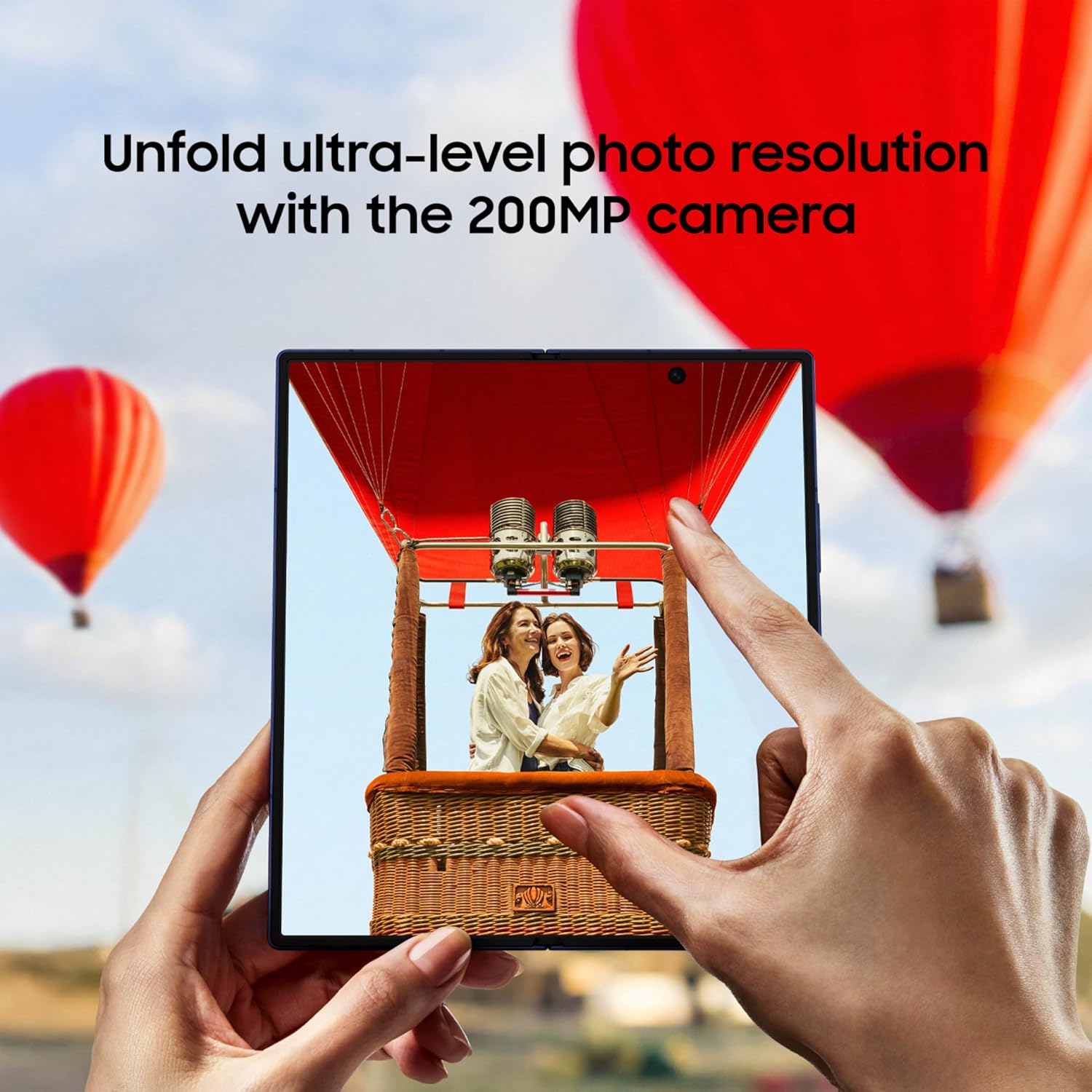
| Main Camera | 200MP | 48MP |
| Inner Screen | 8″ | 8″ |
| Estimated Price | $1,519.00 | Check Latest Price |
The Final Verdict
My final assessment of this hardware is simple: it is a masterpiece of engineering that remains a logistical burden for the end user. It excels at being a portable workstation, but it fails at being a reliable, everyday carry for those who do not live their lives in a controlled environment. I would only recommend this to someone who treats their electronics as disposable luxuries rather than essential tools.
|
|