Aquasonic Black Series Review: Is This ADA Accepted Toothbrush Worth It?
Aquasonic Black Series Review
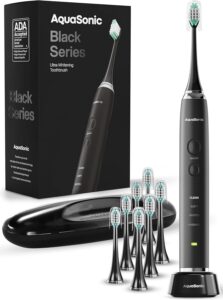
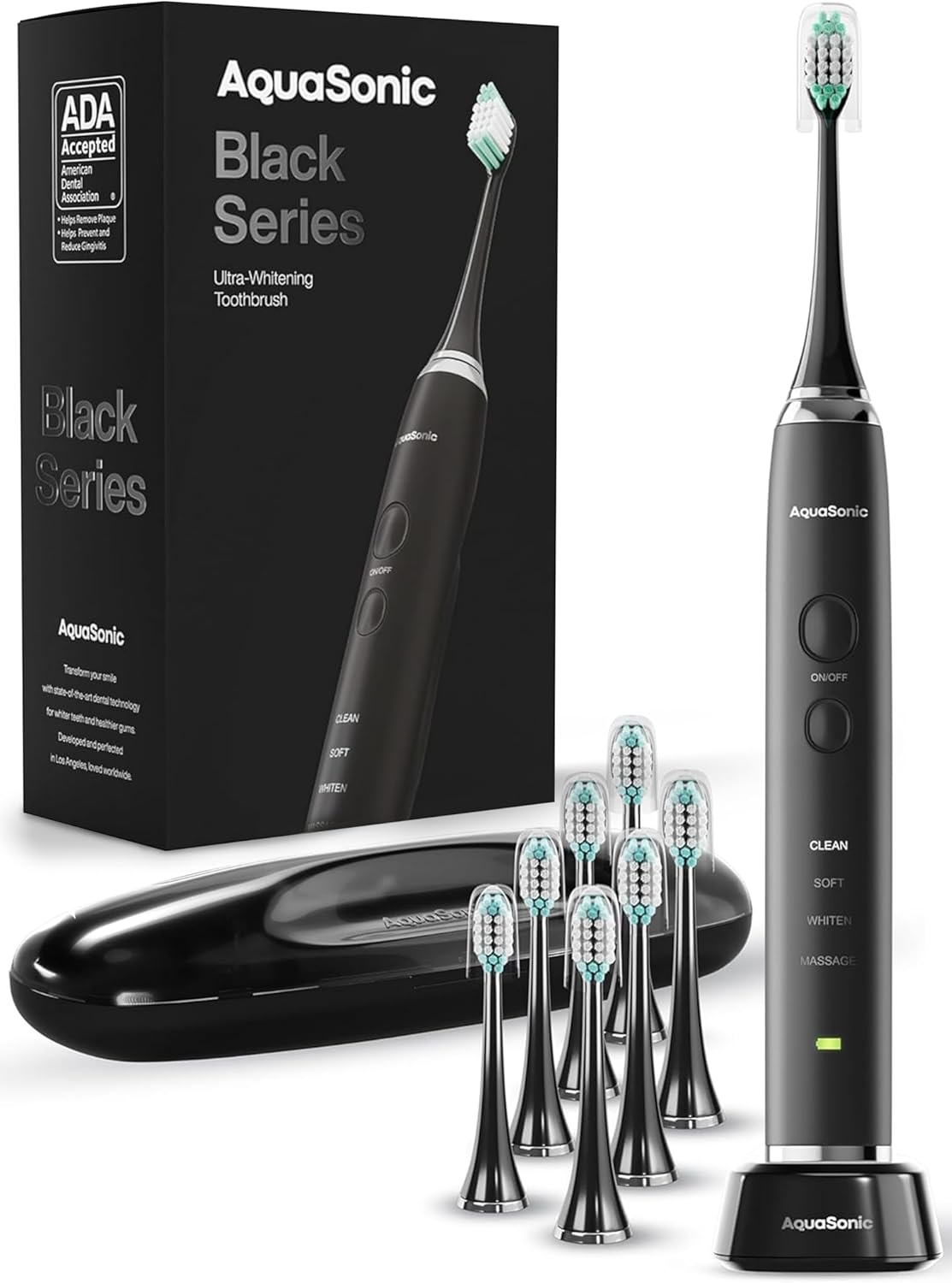
I have handled my fair share of dental hygiene gadgets, and the Aquasonic Black Series immediately attempts to sell itself on sheer volume of accessories rather than complex mechanical innovation. The unboxing experience is surprisingly bloated for a budget-tier item. You are greeted by a mountain of brush heads—eight in total—which feels like an attempt to distract you from the plastic-heavy construction of the handle itself. The matte finish is pleasant enough to touch, but it feels inherently hollow. While it is lightweight, which makes maneuvering around molars easy, the lack of heft signals a reliance on thin, injection-molded plastics that likely will not survive a significant drop onto a tiled bathroom floor.

Aesthetically, this device leans hard into the “minimalist tech” trope. The satin black finish is attractive right out of the box, though I suspect it will show toothpaste splatter and water stains with irritating frequency. The travel case is a functional, albeit basic, piece of BPA-free plastic that clips together with a satisfying, if somewhat flimsy, snap. It isn’t a premium piece of engineering, but it serves its purpose for keeping the bristles clean during a commute or a flight. My initial impression is that the manufacturer spent their entire design budget on the sheer quantity of inclusions rather than the tactile feedback or the premium feel of the power button.
Display and Audio… of the Motor
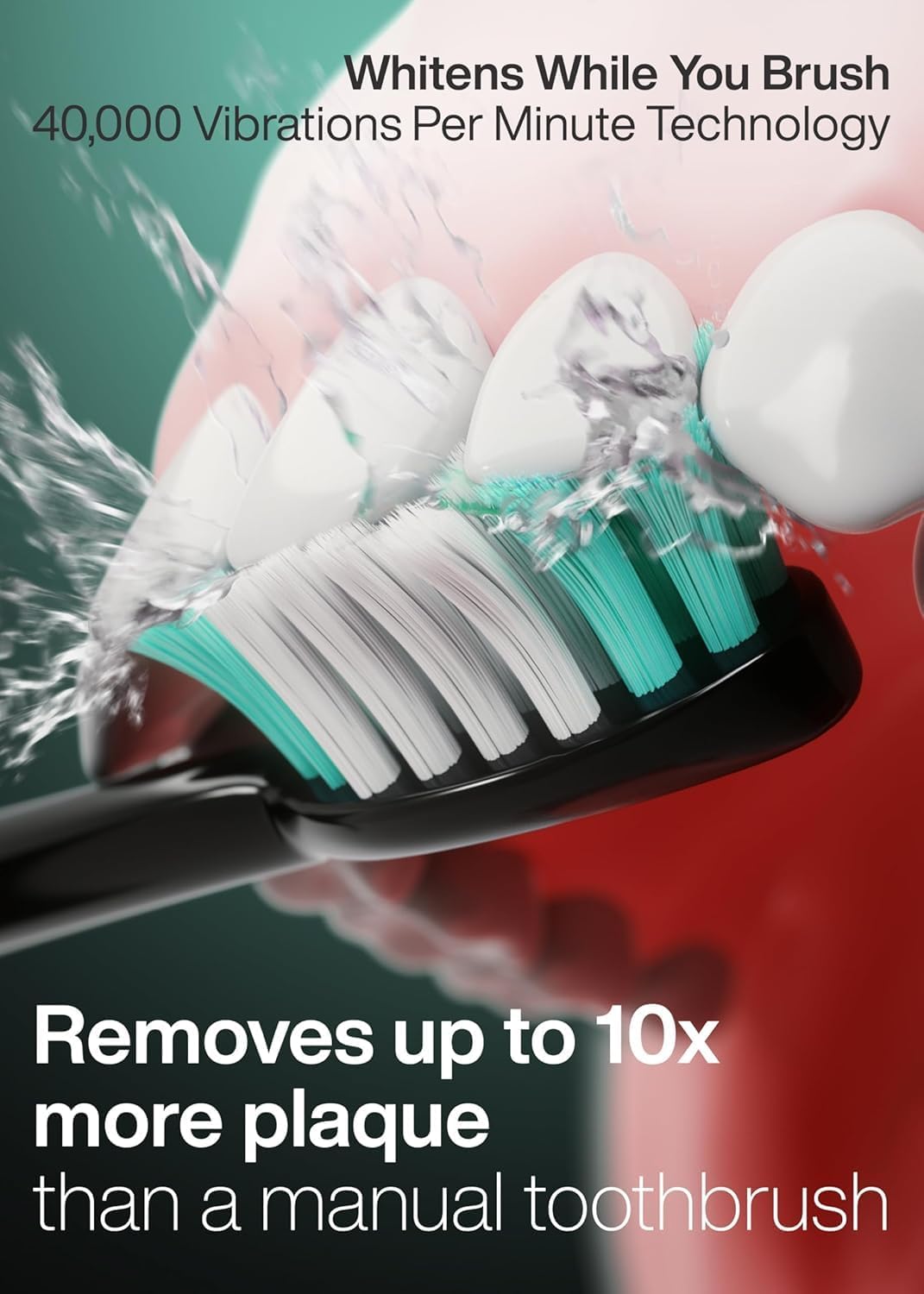
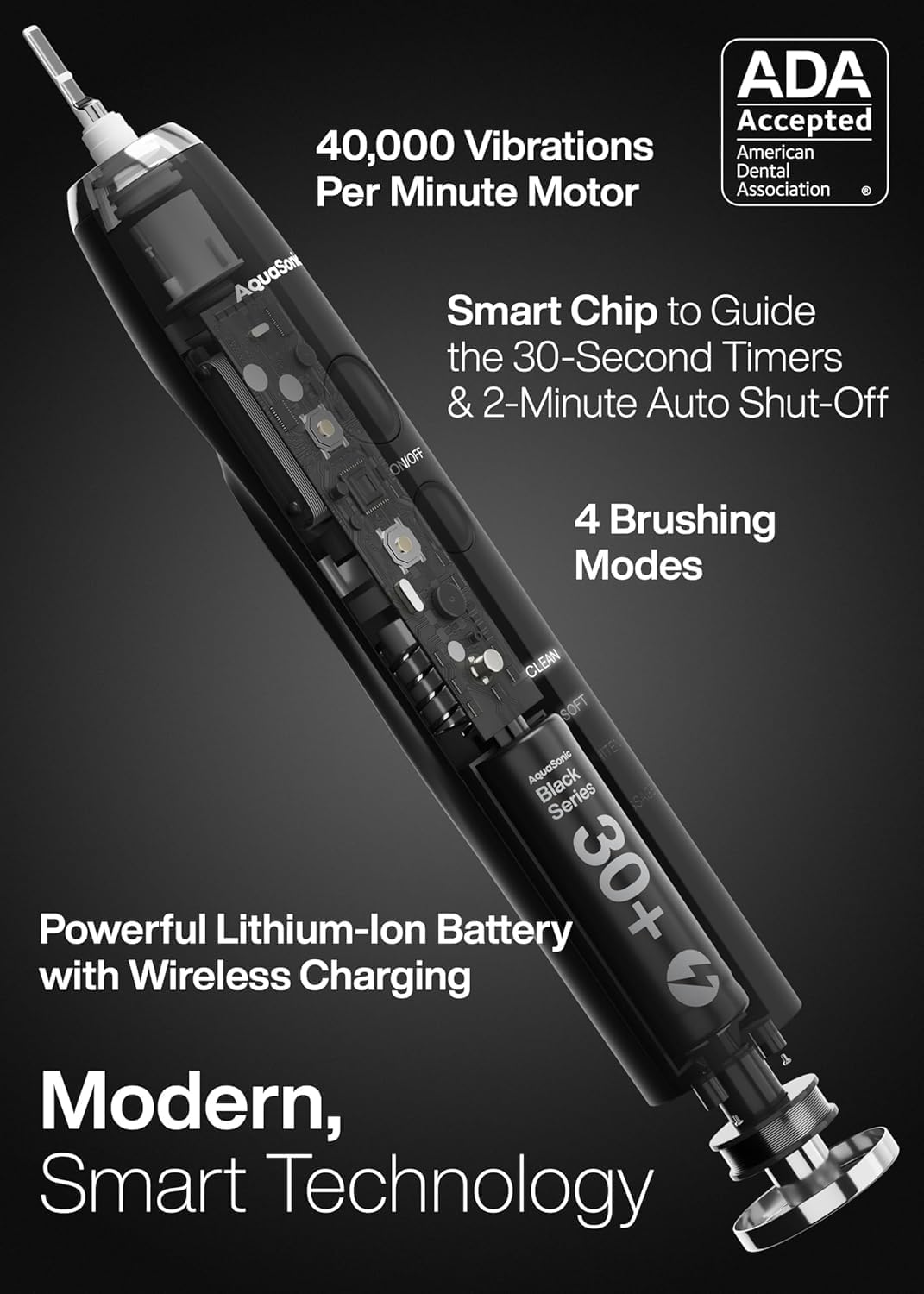
While an electric toothbrush doesn’t have a screen, the “display” of its performance is the vibration output and the acoustic profile. The motor is supposedly capable of 40,000 vibrations per minute, and in practice, it is certainly aggressive. When the bristles make contact with my teeth, the sensation is intense, bordering on abrasive if you are coming from a manual brush. The acoustic feedback is a high-pitched hum that, while not deafening, lacks the dampened, refined sound of top-tier professional brushes. It sounds mechanical and raw, which confirms my suspicion that the internal dampening is virtually non-existent.
The four modes—Clean, Soft, Whiten, and Massage—are clearly distinct in frequency, though the “Whiten” mode mostly just ramps up the intensity to the point of being uncomfortable for sensitive gums. I have found the “Soft” mode to be the only one suitable for daily use without feeling like I am vibrating my enamel off. The smart timer is a standard feature, pulsing every thirty seconds to prompt a quadrant switch. It is a necessary addition, but it lacks the visual LED cues that I have seen on far more expensive models. You are relying entirely on the physical sensation of the motor stalling or pulsing, which is functional but lacks the polish of a more sophisticated interface.
Real-World Performance and Daily Use
In terms of cleaning efficacy, this Aquasonic Black Series Review must address the reality that it gets the job done without any bells and whistles. During my morning routine, I found the brush head movement to be sufficient for dislodging plaque along the gum line. It does not possess the complex oscillating-rotating action of a high-end Braun, but for a sonic-style brush, it creates enough fluid turbulence to make a noticeable difference in how clean my teeth feel after two minutes. It is a workhorse, not a precision instrument.
Multitasking is not the goal here, but the device does handle transition modes well. I did not experience any lag in mode switching, and the memory function—which remembers the last mode you used—is a small but appreciated touch. However, the brush heads themselves are the bottleneck. The DuPont bristles are stiff and require a break-in period. If you have sensitive gums, you will find the initial weeks of use quite jarring. The motor is powerful enough to handle the workload, but it lacks the variable pressure sensitivity that prevents you from brushing too hard, which is a major oversight for a product labeled as ADA accepted.

Battery, Thermals, and Connectivity
The battery life on this unit is where it actually earns some respect. During my testing, I found the claim of four weeks of battery life to be largely accurate, provided you are only using the standard mode. The wireless charging base is compact, but it is a proprietary design; you aren’t going to be charging this with a standard Qi pad you have on your nightstand, which is a missed opportunity for true modern convenience. The charging time is slow, taking nearly a full day to reach a complete state, but given the longevity of the charge, it is a trade-off I can live with.
Thermal management is non-existent, but for a device that runs for two minutes at a time, it doesn’t really matter. The handle stays cool to the touch. The IPX7 rating is the real savior here. I have rinsed the entire unit under the tap repeatedly, and the seal around the power button seems robust enough to keep water ingress at bay. I would be wary of dropping the charging base in water, as it is not built with the same level of protection as the brush handle itself, but for bathroom use, it is perfectly adequate.
The Biggest Flaw
The manufacturer is actively hiding the fact that they have cheaped out on the pressure sensor. In the world of oral care, a pressure sensor is the difference between healthy gums and recession. By omitting this, they are betting that the user will intuitively know how much pressure to apply. It is a dangerous assumption. They prioritize “40,000 VPM” as a marketing bullet point because big numbers look better on a box than “built-in safety features to prevent you from scrubbing your gums away.”
Furthermore, the reliance on a proprietary charging base is a massive pain point. In an era where USB-C is becoming the standard for even the most basic gadgets, forcing a user to keep track of yet another unique, bulky, white plastic plug-in is an archaic design choice. They want you to buy a whole new unit when the charger eventually fails, rather than letting you use a universal cable. It is a calculated move to ensure you stay locked into their specific ecosystem, even if that ecosystem is just a cheap plastic stand.
Target Audience and Verdict
Who should buy this? If you are a student or someone on a budget who wants a step up from a manual brush and doesn’t want to overthink their purchase, this is a solid choice. It offers enough power and enough brush head longevity to justify the thirty-dollar price tag. If you are looking for a primary, long-term tool for your oral health, however, you should look elsewhere. This is a disposable-feeling product that will likely lose its battery capacity or develop charging issues within a few years.
You should absolutely avoid this if you have a history of gum disease or sensitive teeth. The lack of a pressure sensor is a dealbreaker. If you are the type of person who tends to scrub hard, you will cause damage with this motor. Additionally, if you hate clutter, the amount of plastic waste associated with the eight included brush heads will bother you. It is a product built for mass-market appeal, not for the discerning user who demands longevity and precision.
The Comparison
When you compare this to the industry giants, you see the divide between consumer-grade and clinical-grade technology. The high-end competition usually incorporates AI-tracked brushing, detailed mobile app feedback, and far more sophisticated dampening systems. The Aquasonic Black Series is, by comparison, a “dumb” device. It vibrates, it counts to two minutes, and it stops. It lacks the data-driven feedback that people pay a premium for, but it also lacks the software bloat that makes those expensive brushes fail prematurely.
| Feature | AquaSonic Black Series | Philips Sonicare 4100 |
|---|---|---|
| Vibrations Per Minute | 40,000 VPM | 62,000 brush movements |
| Brush Heads Included | 8 | 1 |
| ADA Accepted | Yes | Yes |
| Estimated Price | $34.00 | Check Latest Price |
The Final Verdict
The Aquasonic Black Series is a decent value-oriented electric toothbrush that benefits from a lack of over-engineering. It hits the necessary marks for basic cleaning, provides an absurd amount of replacement heads, and lasts long enough on a charge that you can forget the charger exists for a month at a time. However, the lack of a pressure sensor and the proprietary charging system prevent it from being a truly “premium” experience. For the price, it is a reasonable purchase, but it is not a tool you will be proud to own in three years.
|
|